
Sustainability & Responsibility
Growing Responsibly. Acting with Integrity.
At Griffin and Brand, we believe that long-term success goes hand in hand with ethical practices, environmental stewardship, and social responsibility. Our commitment to sustainability starts at the source and extends through every part of our supply chain.


Sustainable Practices for a Better Future
Transparency and accountability are at the heart of how we operate. As a financially stable, family-run business, we take a long-term approach to sustainability — always prioritising people, the planet, and partnerships over short-term gain.
We work closely with our global network of growers to support responsible farming, fair labour practices, and ongoing innovation in sustainable agriculture. Our grower base includes SEDEX B members, and we ourselves are active A/B SEDEX members. All of our growers participate in SMETA or GRASP social audits, with third-party assessments conducted in countries such as India, Peru, South Africa, Chile, Brazil, Egypt, Greece, Italy and Spain.
Environmental Impact Reduction
We are committed to minimising our environmental footprint through continuous innovation:

Zero landfill policy
All waste is segregated and recycled, including cardboard, plastics, and grape waste

LED lighting
Installed across our facility, reducing energy use by 57%

Solar investment
Our 231kW photovoltaic panel system has saved over 326,000 lbs of CO₂ in its first nine months

Airfreight reduction
By working with suppliers to extend seasonal supply windows

Plastic reduction
We’ve reduced packaging plastic content by up to 14%

Recyclable packaging
All punnets purchased are made from 70%–100% recycled PET
We’re also actively collaborating with our packaging suppliers to find eco-friendly alternatives and reduce overall plastic usage without compromising food safety or shelf life.
Supporting Biodiversity and Soil Health
Our growers are involved in groundbreaking sustainability initiatives, Such as:
• Partnering with national ornithological societies to create bird habitats
• Participating in INSPIA, promoting sustainable agricultural practices that protect biodiversity, soil, and water resources
36% of our energy usage is from renewable sources
Our site reduced carbon emissions by 29% from 2023 to 2024
• Food waste – 27% reduction
• Ethical bits – supporting local communities – India, Namibia

Case Study: Agrivale
Agrivale held an open day with local children to plant trees at their site to promote awareness about the importance of preservation and reforestation. During planting, they learned in practice about the role of trees in balancing the ecosystem and improving quality of life. Projects like this not only contribute to the environment but also inspires future generations to take care of the planet

Case Study: AgrokasaWastewater treatment plant (PTAR)
In August 2020, Agrokasa began construction of the Wastewater Treatment Plant (PTAR) in Ica, which is designed to operate 365 days a year and 24 hours a day. This project will be one of the most modern in the region and will provide multiple benefits for the community, the environment and the agricultural sector.
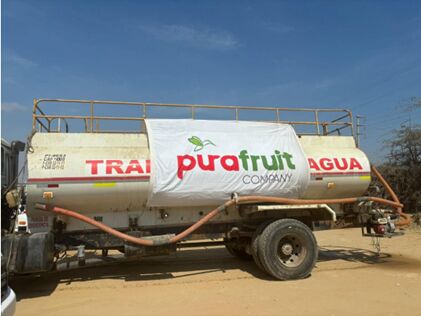
Case study: Purafruit
Piura is going through a serious water crisis caused by prolonged drought and the deterioration of its hydraulic infrastructure. The Poechos dam, the main source of water for the region, is at critical levels, which threatens access to drinking water, affects agriculture and weakens the economy and public health.
This situation has generated great challenges for neighboring communities, impacting their quality of life and limiting access to essential resources. In response, Pura fruit has reaffirmed its commitment to these localities, implementing concrete actions to mitigate the effects of the emergency and promote equitable access to water in vulnerable communities.
As part of this commitment, in November 2024 Pura fruit made donations of drinking water to the population centers of Olivares, San Fernando, Quebrada, Parales, Nueva Esperanza, San Baltazar and La Peñita. benefiting about 3,600 inhabitants